
প্রিন্ট এর তারিখঃ জুন ৩, ২০২৬, ৪:৩০ এ.এম || প্রকাশের তারিখঃ জুন ৩, ২০২৬, ১:৪০ পূর্বাহ্ণ
Veteran Politician Tofail Ahmed Laid to Rest Beside Parents in Native Bhola
Swapan Kumar Singh :
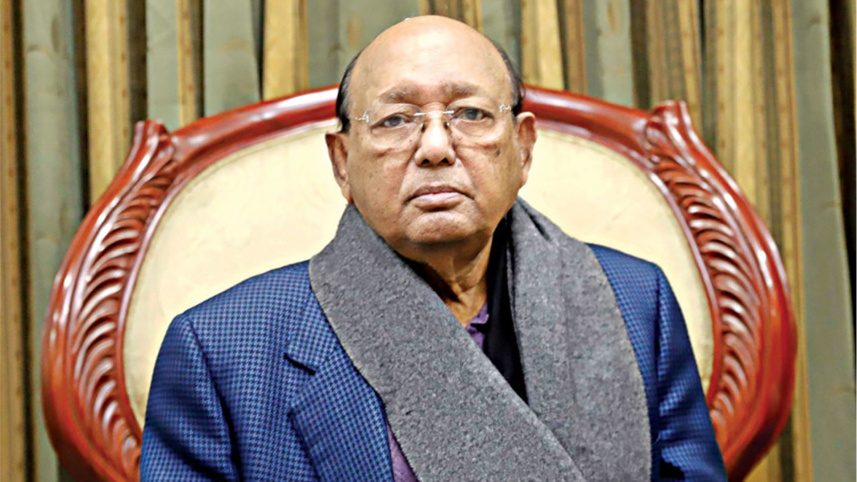
Veteran politician, former Commerce Minister, and nine-time Member of Parliament Tofail Ahmed was laid to rest in his ancestral village in Bhola on Tuesday, following funeral prayers attended by thousands of mourners from across the country.
The senior Awami League leader passed away at around 3:30pm on Monday, June 1, while undergoing treatment at Square Hospital in Dhaka. He was 82. Family members said he had been suffering from multiple age-related health complications and had experienced prolonged physical difficulties following a stroke in recent years.
His first funeral prayer was held after Maghrib at Takwa Mosque in Dhanmondi, Dhaka, on Monday evening.
On Tuesday, his body was flown to Bhola by helicopter and arrived at the Bir Sreshtho Mostafa Kamal Bus Terminal helipad at 1:35pm. It was later taken to Bhola Government School ground, where a second funeral prayer was held at 2:30pm.
Before the prayer, district authorities accorded him a state guard of honour in recognition of his contributions to the nation and public service.
The body was then taken to his ancestral home in Koralia village under South Dighaldi Union of Bhola Sadar upazila. A final funeral prayer was held there at around 4:30pm, drawing relatives, well-wishers, political leaders, activists and people from different walks of life.
Following the prayer, Tofail Ahmed was buried at the family graveyard beside the graves of his parents, Azhar Ali and Fatema Khatun, and his late wife Anwara Begum. Many mourners paid their last respects by placing handfuls of soil on his grave.
Authorities enforced extensive security measures across the area during the funeral and burial proceedings to ensure law and order amid the large gathering of mourners.
Born on October 22, 1943, in Koralia village on the banks of the Tetulia River, Tofail Ahmed emerged as one of the most influential student leaders of the 1960s. A former vice-president of Dhaka University Central Students' Union (DUCSU), he played a prominent role in the 1969 Mass Uprising and later became one of the key organisers of Bangladesh's Liberation War.
Over a political career spanning more than five decades, he served the country in several ministerial positions, including as Minister of Industries and Minister of Commerce. He was elected to Parliament nine times and remained an influential figure in national politics until his final days.
He is survived by his only daughter, Dr Taslima Ahmed Munni, son-in-law Dr Touhiduzzaman Tuhin, and a large number of relatives, colleagues, supporters and admirers.
His death marks the end of a significant chapter in Bangladesh's political history, leaving behind a legacy intertwined with the country's struggle for democracy, independence and development.
RED TIMES LIMITED
116-117, Concord Emporium, Kataban, Dhaka-1205.
Mobile: 017111-66826
Email: redtimesnews@gmail.com
Copyright © 2026 RED TIMES. All rights reserved. প্রিন্ট করুন
 সেভ করুন