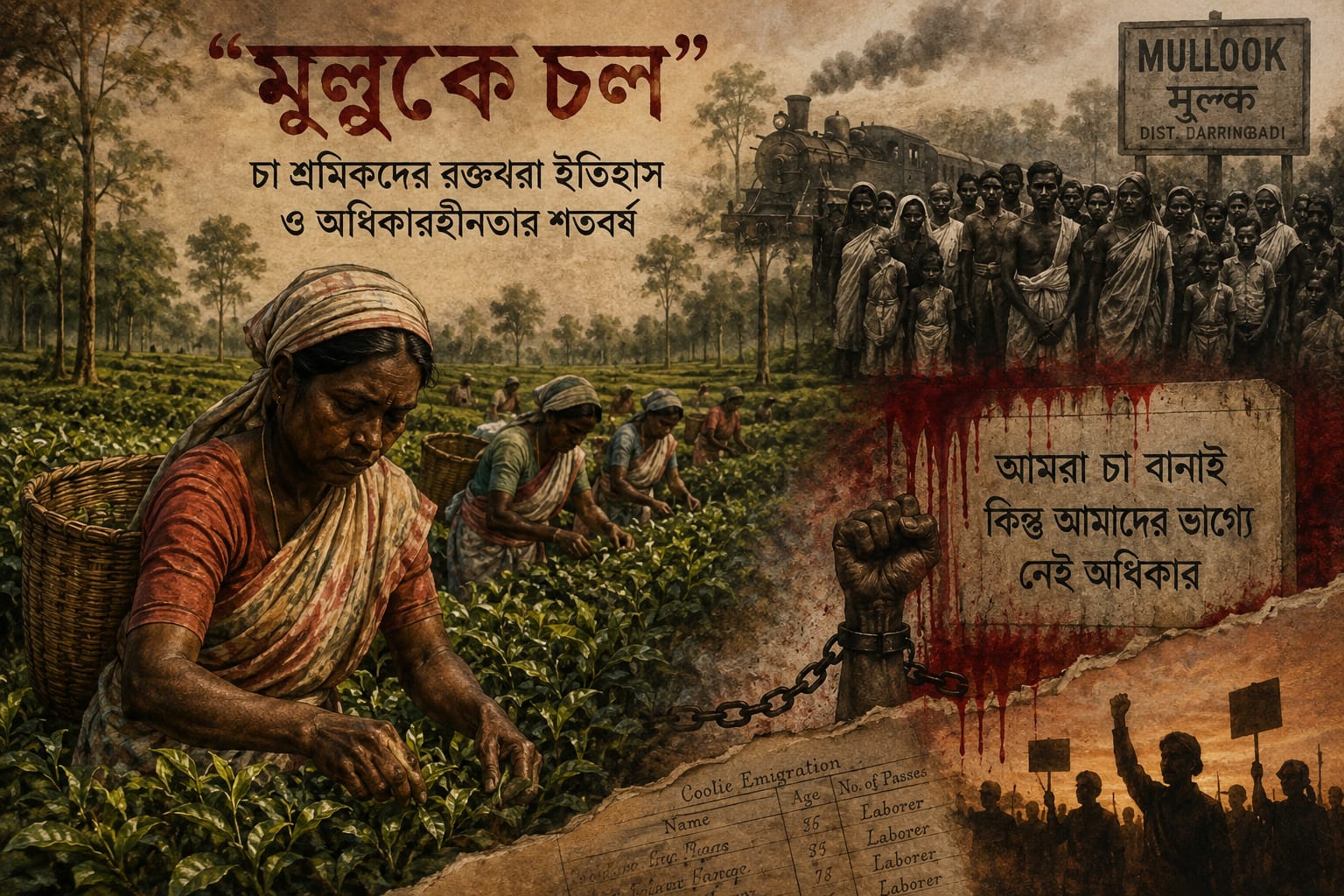
The “Mulluke Cholo” movement of 1921 stands as one of the most significant yet largely forgotten episodes in the history of labour resistance in the region. More than a century later, the movement continues to symbolise the sufferings, sacrifices, and unfulfilled aspirations of tea garden workers under colonial rule.
With the expansion of the tea industry in Sylhet and Assam during the British period, plantation owners required a large workforce to sustain production. Thousands of poor people from different parts of India were brought to the tea gardens with promises of employment and a better life. However, many of them soon found themselves trapped in harsh working conditions, low wages, and a system marked by exploitation and control.
Life inside the tea gardens was extremely difficult. Workers had to endure long hours of labour for meagre wages, while restrictions on movement and various forms of abuse became part of their everyday reality. Over time, frustration and anger spread among the labour communities.
The situation deteriorated further after the First World War, when wages were reportedly reduced amid economic uncertainty. As hardships intensified, many workers began demanding the right to leave the plantations and return to their native homes. This growing desire eventually led to the “Mulluke Cholo” movement, meaning “Let us return to our homeland.”
In 1921, thousands of tea workers from different estates across greater Sylhet left the plantations with their families and began their journey in hopes of returning home by rail. The British administration, however, moved to prevent the mass departure by imposing restrictions and tightening control over transportation routes.
Despite the obstacles, the workers continued their journey amid severe hardship. During this time, several local political and social figures, along with ordinary people, came forward with food, shelter, and assistance for the travelling labourers.
After days of uncertainty and suffering, many workers gathered in Chandpur. On the night of May 20, 1921, British forces opened fire on unarmed tea workers who were staying near the Chandpur railway area. Historical accounts suggest that many workers were killed and injured in the incident, although the exact number of casualties remains disputed.
The Chandpur tragedy is regarded as one of the darkest chapters in the history of tea workers’ movements in the subcontinent. Many of the surviving labourers were later forced to return to the tea gardens they had attempted to leave behind.
Although colonial rule has long ended, tea workers in Bangladesh still continue to face multiple challenges related to wages, healthcare, education, housing, and land rights. More than a hundred years after the “Mulluke Cholo” movement, many of their long-standing demands remain unresolved.
Tea remains an important part of Bangladesh’s economy and heritage. Yet the contributions and sacrifices of the workers who built the industry often receive little attention in mainstream historical discussions. The story of “Mulluke Cholo” serves as a reminder that the dignity and rights of workers must remain central to any vision of progress and development.
The movement and the lives lost during the Chandpur incident deserve greater recognition, remembrance, and historical preservation for future generations.